
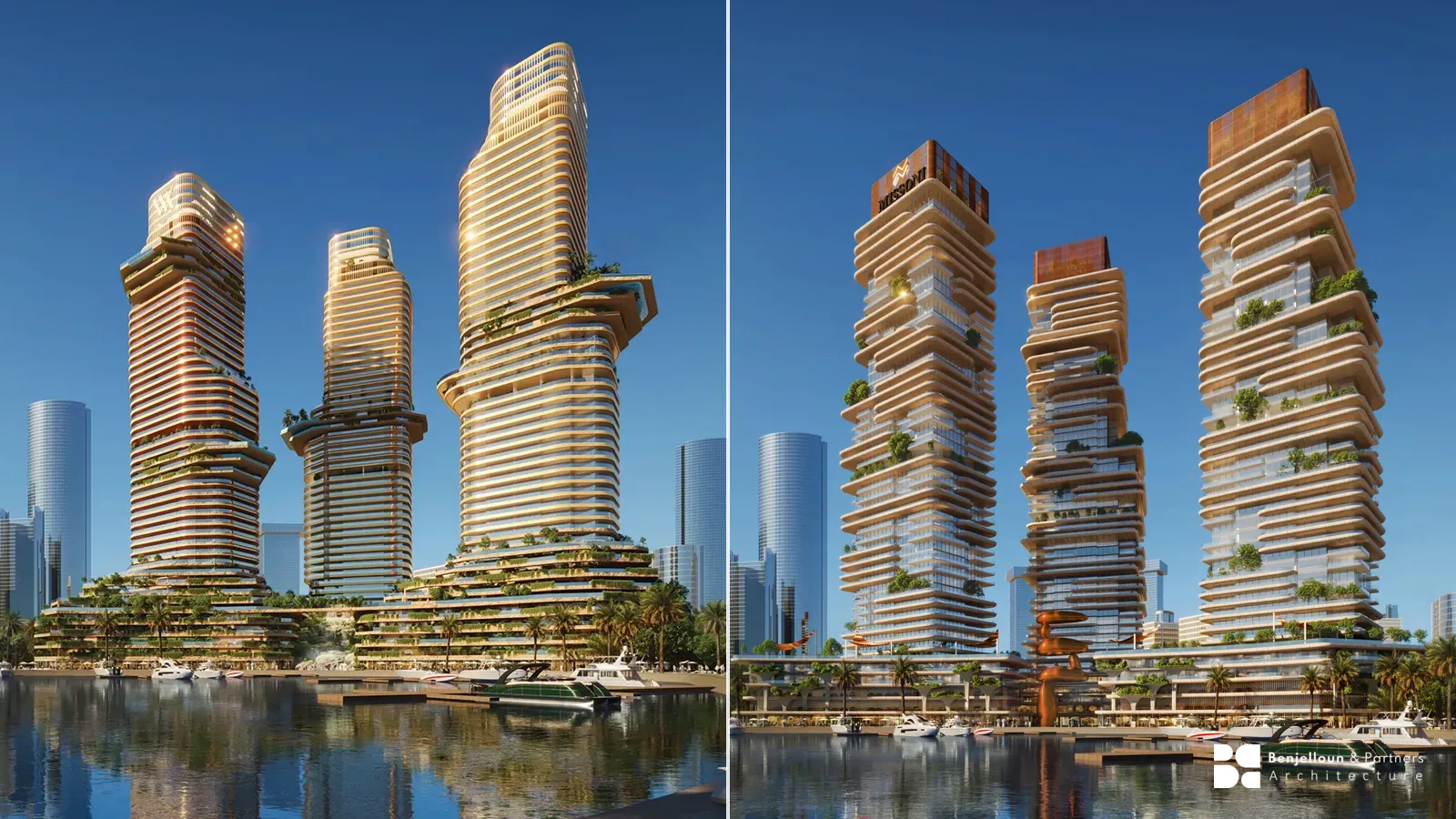
Hotel-branded vs design-branded residences comes down to what the brand brings. A hotel-branded residence carries a hospitality company's name and, usually, its service: concierge, housekeeping and an operator running the building. A design-branded residence carries the identity of a fashion, jewellery, automotive or design house, and its contribution is the look and feel of the architecture and interiors rather than an operating platform.
Key points
- Hotel brands bring an operating standard; design brands bring an identity.
- Hotel-branded buildings are planned around service; design-branded buildings are planned around character.
- The two models produce different design briefs, different approval parties and different running arrangements.
- A branded residence is not a hotel suite: residents own their homes, and the building is designed for permanence.
What is a hotel-branded residence?
A hotel-branded residence is a home sold under the name of a hospitality company. The brand licenses its name and its standards, and in most cases the hotel company, or an operator it approves, runs the residential services. Residents buy into a known standard of living: arrival, concierge, housekeeping, maintenance and often access to restaurants, spa and pool facilities shared with or modelled on the hotel.
The brand's real asset here is operational. It has spent decades learning how a building should be serviced, and its standards describe that learning in dimensions, routes and specifications. For the architect, a hotel brand arrives as a document: what must exist, how large it must be, how staff and goods move, and how the resident's experience is protected from all of it. What a hotel operator requires sets out what that document typically contains.
Hotel-branded residences are often, though not always, attached to a hotel: in the same tower, on a shared podium, or next door. Where they are, the residential design has to be coordinated with an operating building, and separation between guests and residents becomes one of the defining planning problems.
What is a design-branded residence?
A design-branded residence carries the name of a house whose reputation was built outside hospitality: fashion, jewellery, automotive or furniture design. The brand licenses its identity, and its involvement is weighted towards visual character: the lobby, the amenity spaces, the interiors of the residences, the material palette and, sometimes, elements of the façade.
What a design brand usually does not bring is an operating platform. Residential services in a design-branded building are typically run by a third-party management company, and the service standard is set by the developer and that manager rather than by the brand. The brand protects how it is represented; it does not run the concierge desk.
The design challenge is translation. A fashion house's identity was developed for garments and objects, an automotive brand's for vehicles. Carrying that identity into a building without producing a costume, or a showroom with bedrooms, is the architect's real task.
Hotel-branded vs design-branded residences: what actually differs?
| Question | Hotel-branded residence | Design-branded residence |
|---|---|---|
| What the brand brings | An operating standard and a service model | An identity, a design language and a name |
| Who usually runs the building | The hotel company or an operator it approves | A third-party management company |
| Where the brand's standards bite | Back of house, service routes, amenity provision, arrival | Lobby, interiors, materials, amenity character |
| Typical relationship to a hotel | Often attached to or beside a hotel | Usually a standalone residential building |
| Main design risk | Service infrastructure squeezed late | An identity applied as decoration |
Neither model is better. They answer different questions. A hotel brand answers "how will this building be run?"; a design brand answers "what will this building feel like?". The best projects in both models answer the other question as well.
How does the design brief change between the two?
In a hotel-branded scheme the brief starts with operations. The brand's standards fix minimum dimensions, amenity provision, staff areas and service circulation, and they arrive early. Much of the architect's work in the first stages is reconciling those standards with the site, the permitted envelope and the developer's sellable area, and making sure back of house is planned alongside the resident's journey rather than fitted around it.
In a design-branded scheme the brief starts with character. The brand's involvement concentrates on what residents and visitors see and touch, and its review focuses on whether the building represents the house faithfully. The operational planning is still essential, because residents still expect service, but it is set by the developer and the appointed manager rather than imposed by the brand.
In both cases the contract defines what the brand may approve, and when. Understanding branded residence contracts explains which clauses carry the design risk, and how branded residences are designed follows the process from brief to building.
Is a branded residence the same as a hotel suite?
No. A hotel suite is a room in a business: it is sold by the night, serviced daily and designed to be identical to the one next to it. A branded residence is a home: it is owned, lived in for years and expected to carry the permanence, storage, privacy and individuality a home requires.
The difference shows up in the plan. Residences need kitchens that are cooked in, storage for a life rather than a suitcase, and arrival routes that do not pass through a hotel lobby full of strangers. Where a branded residence shares a building with a hotel, the architecture has to deliver the hotel's service without the hotel's anonymity, and that separation is one of the more demanding exercises in the typology.
What should a buyer look at in each model?
For a hotel-branded residence, the question is who will actually run the building once it opens, under what agreement, and which services are included in the service charge. For a design-branded residence, the question is who the appointed manager is and what standard of service they are committed to, since the brand itself will not deliver it.
In both cases, off-plan purchases in Dubai are registered through the Dubai Land Department, and the project's registration and the developer's obligations sit there rather than with the brand. The brand's name on the building is a licence, not a guarantee of ownership or delivery.
Our work across both models
Our portfolio includes both kinds of branded residence. Among the hotel-branded schemes are COMO Residences on Palm Jumeirah, Fairmont Residences Solara Tower in Downtown Dubai, Waldorf Astoria Residence on Reem Island and Hyde Meydan. Among the design-branded schemes are Missoni Residence, Cartier Residence and Aston Martin Residence in Abu Dhabi.
Working on both makes the difference concrete. The hotel-branded schemes are shaped from the inside out, by service and separation. The design-branded schemes are shaped from the outside in, by identity and material. Both still have to work as homes, and that is the part of the brief no brand can supply.
Which model fits a project?
The choice is commercial before it is architectural, but the architecture should inform it early:
- If the site sits beside or within a hotel, or the buyer profile expects hotel-grade service, a hotel brand's operating standard is the stronger proposition.
- If the site and the buyer reward a distinctive identity, and the service can be delivered by a strong independent manager, a design brand can differentiate the building more clearly.
- Either way, the brand should be chosen before concept design, because the brand's standards are part of the brief, not a finish applied to it.
For the definition and the commercial logic behind both models, start with what a branded residence is. For a branded brief at concept stage, contact the studio.