
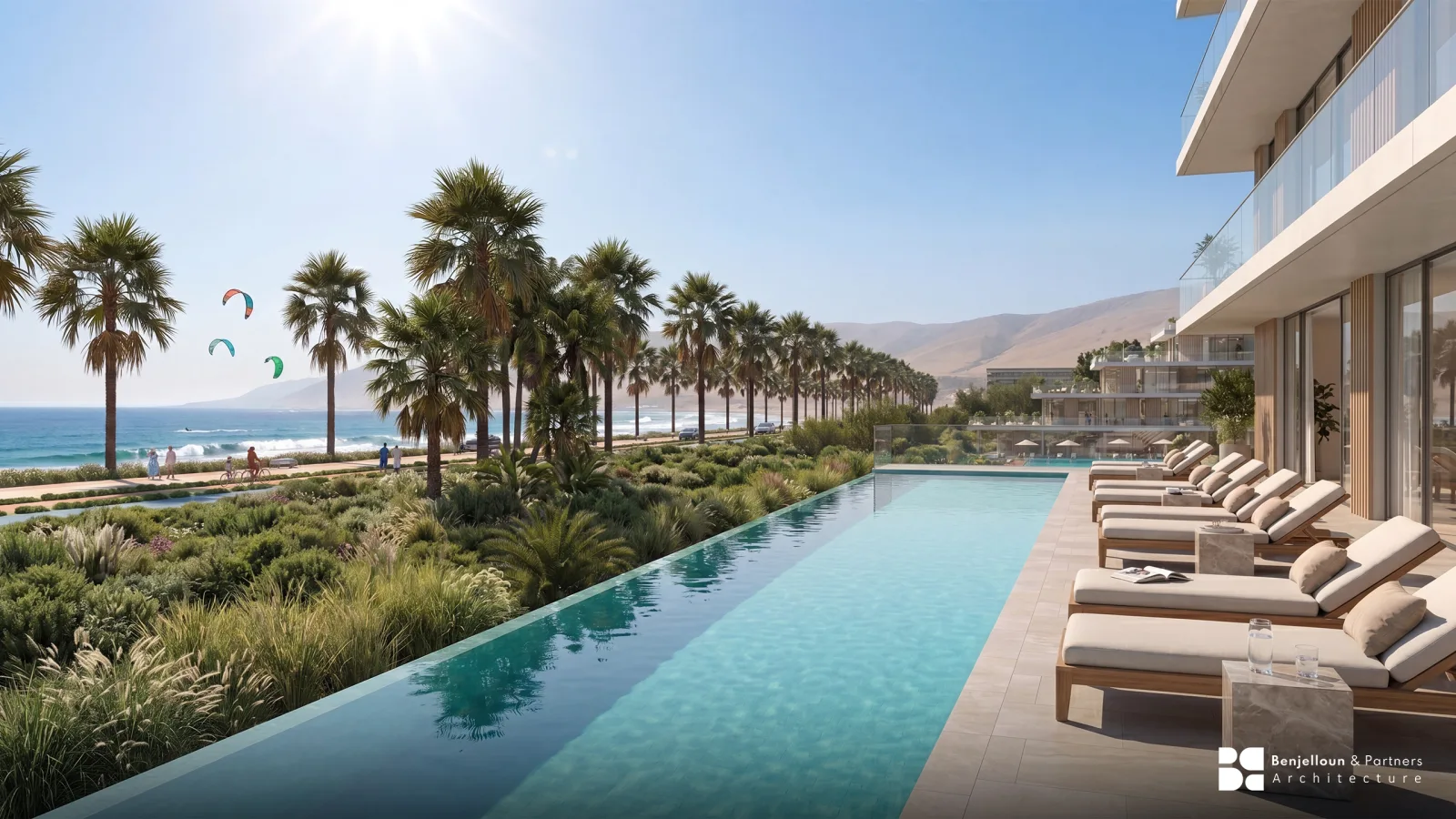
المخطط الشامل للمنتجع هو خطة لما سيشعر به الناس على مدى أسبوع كامل، مُترجَمة إلى طرق ومناسيب ومبانٍ وزراعة. وهذا تكليف أصعب مما يبدو، لأن معظم القرارات التي تصنع التجربة تُتَّخذ قبل تصميم أي مبنى، ولأن أغلبها يصبح غير قابل للتراجع عملياً بمجرد أن تستقر البنية التحتية في الأرض.
والمواقع الساحلية تزيد الأمر صعوبة. فالواجهة الشاطئية هي الأصل الأثمن، وهي سبب وجود المشروع، وهي في الوقت نفسه أشدّ أجزاء الموقع تقييداً؛ وإغراء إهدارها كبير.
الواجهة الشاطئية مورد محدود
كل مخطط شامل لمنتجع ساحلي هو مفاوضة على سلعة نادرة. فطول الشاطئ ثابت، والوظائف التي تطمح إلى الوقوف عليه أكثر مما يتّسع له.
وغريزة المطوّر عادةً أن يضع الوحدات الأعلى قيمة على حافة الماء مباشرة. وإذا جرى ذلك بلا ضبط، نشأ جدار متصل من الفلل على امتداد الشاطئ، وهو ما يحقق أمرين: يرفع عدد الوحدات المميزة إلى أقصاه، ويلغي أي علاقة بين بقية المنتجع والبحر. فالضيف النازل على بُعد خمسين متراً من الماء يعيش في مشروع أدار ظهره للسبب الذي جاء من أجله.
والبديل أن تُعامَل الواجهة الشاطئية بوصفها ملكاً مشتركاً: تشغل الوظائف العامة وشبه العامة جزءاً منها، وتُستعار الإطلالات عبرها من الخلف، وتكون الوحدات المميزة أقل عدداً وأرفع مستوى بحق. وهذا يعني وحدات أقل على الشاطئ ومنتجعاً أفضل بكثير؛ والاختيار بين المسارين قرار تجاري يتّخذه المخطط الشامل نيابةً عن العميل، سواء نوقش صراحةً أم لم يُناقش.
وجعل هذا القرار صريحاً، ومبكراً، هو أنفع ما يقدّمه مخطِّط الموقع في مشروع ساحلي.
المناسيب تُنجز ما تعجز عنه الجدران
أنفع أداة في تخطيط المنتجعات هي المقطع الرأسي. فحيثما توفّر للموقع شيء من التضاريس، أتاحت فروق المناسيب البسيطة للوحدات المتراجعة عن الماء أن ترى فوق ما أمامها، فتتحوّل وحدات الصف الثاني من وحدات منقوصة إلى وحدات مرغوبة.
كما تحلّ فروق المناسيب مسألة الخصوصية دون أسوار، وتحجب مسارات الخدمة دون إخفائها خلف جدران، وتصنع إحساس الوصول والانحدار الذي يستعمله المنتجع الجيد ليفصل العالم الخارجي عن العالم الداخلي. أما في الموقع المستوي فيجب تصنيع ذلك كله، وتصنيعه مكلف؛ وهذا سبب كافٍ للحسم مبكراً فيما إذا كانت التضاريس صالحة للاستثمار أم يجب استحداثها.
المسافة هي القيد التشغيلي
المنتجعات مبانٍ أفقية. فمتطلبات الخدمة نفسها التي يحلّها فندق المدينة بمصعد خدمة تُحلّ هنا عبر مئات الأمتار، والمخطط الشامل هو الذي يقرر المسافة التي يجب أن يقطعها كل شيء.
فالطعام يجب أن يصل إلى المطاعم الطرفية بحرارته الصحيحة. وخدمة الغرف يجب أن تبلغ أبعد فيلا. والنفايات والغسيل والتوريدات يجب أن تتحرك دون أن تقطع مسارات الضيوف. والموظفون يجب أن يصلوا ويبدّلوا ملابسهم وينتشروا. وكل ذلك يحدده موقع منطقة الخدمات الخلفية وطريقة وصول شبكة الخدمة إلى الوحدات، وكل ذلك يُحسم في مرحلة المخطط الشامل.
ونمط الفشل هنا معروف. فالمنتجع الذي تتطلب فيه كل رحلة للضيف عربة كهربائية، وتتراجع فيه إيرادات المطاعم لأن الوصول إليها متعب، وتظل تكاليف تشغيله أعلى من المُقدَّر بصفة دائمة، هو غالباً منتجع رُسمت خطته للقطات الجوية لا لمسافات المشي.
وثمة انضباط بسيط يساعد: اختبر المخطط سيراً على الأقدام. من الغرفة إلى المطعم، ومن الغرفة إلى الشاطئ، ومن الغرفة إلى المنتجع الصحي، ثم مسارات الخدمة المقابلة. فإن بدت هذه المسافات غير معقولة على الورق، فستكون غير معقولة تحت أربعين درجة من الحرارة، وفي اليد طفل وحقيبة.
تقسيم المراحل قرار تصميمي لا قرار جدولة
قليل من المنتجعات يُبنى دفعة واحدة. فالأغلب يُنفَّذ على مراحل، والمخطط الشامل الذي لم يُصمَّم ليُنفَّذ على مراحل يُنتج مرحلة أولى تبدو كورشة بناء يقيم فيها ضيوف.
وحسن تقسيم المراحل يعني أن تكون كل مرحلة مكتملة بذاتها: مدخلها الخاص، ومرافقها الخاصة، وحدٌّ يُقرأ بوصفه حافة لا وصلة غير مكتملة. ويعني كذلك تخطيط البنية التحتية للمراحل اللاحقة منذ البداية، لأن تمرير عمود خدمات داخل منتجع عامل يُحدث اضطراباً يكلّف حجوزات.
وهذا أحد المواضع التي يستحيل فيها فصل التخطيط الشامل عن الاستراتيجية التجارية. فتسلسل طرح المنتج الذي يريده المطوّر وتسلسل البناء المنطقي للموقع ليسا متطابقين بالضرورة، والتوفيق بينهما جزء أصيل من عمل المخطط الشامل.
المناخ يشكّل المخطط، لا المباني وحدها
في المناخات الحارة، المخطط الشامل هو الذي يقرر ما إذا كان المنتجع صالحاً للاستعمال في الهواء الطلق أصلاً. فالتوجيه بالنسبة للرياح السائدة والشمس، وعرض المسارات وتظليلها، ومواضع الماء، وكثافة الزراعة وأنواعها، وتوفير نقاط توقّف مظللة، كلها تقرر ما إذا كانت المساحات بين المباني مأهولة أم مجرد ممرات تُقطع مسرعاً.
ويستحق النسيم السائد عنايةً خاصة، لأنه مجاني ولأن حجبه يقع بالخطأ بسهولة. فصفٌّ من المباني يعترض الرياح السائدة سيُسكِن الهواء خلفه طوال عمر المنتجع.
المشهد الطبيعي بنية لا زينة
في المنتجع، ليس المشهد الطبيعي زخرفة تُضاف في النهاية. فهو يوفّر الظل، ويحدّد المسارات، ويحجب مناطق الخدمة، ويفصل العام عن الخاص، ويرسّخ طابع المكان أكثر مما تفعل العمارة نفسها.
وهو يحتاج إلى وقت لينضج، وهذا يرجّح الزراعة المبكرة والتصميم على أساس ما سيكون عليه المشهد في السنة العاشرة لا عند التسليم. فالمنتجع الذي يعتمد على أشجار ناضجة للظل والخصوصية ثم يفتتح بلا شيء منها هو منتج مختلف عن ذاك الذي صُمِّم، وسيُقيَّم على هذا الأساس.
واختيار الأنواع النباتية في بيئة ساحلية قاحلة مقيَّد بالملوحة والحرارة وتوافر المياه، وينبغي أن تصوغ هذه القيود مفهوم المشهد الطبيعي منذ البداية، بدلاً من اختزال رسم وارف إلى ما سيبقى حياً فعلاً.
البيئة قيد وأصل في آن واحد
تحمل المواقع الساحلية في كثير من الأحيان حساسيات بيئية: موائل بحرية، وأنظمة كثبان، وأنواع محمية، وجودة مياه. وهذه تقيّد خطوط البناء والصرف وأسلوب تنفيذ الموقع، ويجب تحديدها قبل رسم أي مخطط، لا اكتشافها في مواجهة مخطط قائم.
وهي أيضاً، على نحو متزايد، جزء من المنتج. فالمنتجع القادر على إثبات علاقة حقيقية بمحيطه يملك ما يقوله، وهو ما لا يملكه منتجع سوّى موقعه بالأرض. ومعاملة القيد البيئي بوصفه مُدخلاً تصميمياً مبكراً، لا عقبة امتثال، تُنتج عادةً مشروعاً أسلس ومكاناً أفضل.
مفاهيم شائعة خاطئة
«ينبغي تعظيم عدد الوحدات المطلّة على الشاطئ»
جدار متصل من الفلل على امتداد الشاطئ يلغي أي علاقة بين بقية المنتجع والبحر. ومعاملة الواجهة الشاطئية بوصفها ملكاً مشتركاً، مع وحدات مميزة أقل عدداً وأرفع مستوى بحق، تُنتج عادةً منتجعاً أفضل.
«الموقع المستوي أسهل في التخطيط من الموقع المنحدر»
فروق المناسيب البسيطة تتيح للوحدات المتراجعة عن الماء أن ترى فوق ما أمامها. أما في الموقع المستوي فيجب تصنيع الأثر نفسه، بكلفة حقيقية.
«تقسيم المراحل مسألة جدولة لا مسألة تصميم»
المخطط الشامل الذي لم يُصمَّم ليُنفَّذ على مراحل يُنتج مرحلة أولى تبدو كورشة بناء يقيم فيها ضيوف.
«يمكن إضافة المشهد الطبيعي الناضج بعد افتتاح المنتجع»
الزراعة تحتاج سنوات لتنضج. والمنتجع الذي يعتمد عليها للظل والخصوصية ثم يفتتح بلا شيء منها منتج مختلف عن ذاك الذي صُمِّم.
ما ينبغي للمطوّر أن يحسمه أولاً
- كيف تُوزَّع الواجهة الشاطئية بين الإقامة الخاصة والاستعمال المشترك؟
- ما أقصى مسافة مشي مقبولة من الغرفة إلى المرافق الرئيسية؟
- أين تقع منطقة الخدمات الخلفية، وكيف تصل شبكة الخدمة إلى أبعد وحدة؟
- كيف يُقسَّم المشروع إلى مراحل، وهل كل مرحلة مكتملة بذاتها؟
- ماذا تقدّم التضاريس، وما الذي يجب استحداثه؟
تضم محفظتنا في التخطيط الشامل مشروع Khmissat Aghroud، وهو مخطط شامل لمنتجع ساحلي على الساحل الأطلسي المغربي، ومشروع The Dunes على الساحل السنغالي، وPetra Jordan Island ضمن The World في دبي، وThe Wave Masterplan في أبوظبي. أربعة سواحل، وأربعة أطر تنظيمية، وسؤال توزيع الواجهة الشاطئية المطروح أعلاه أُجيب عنه في كل منها إجابة مختلفة — وهذه هي الحجة على حسمه عن قصد لا بحكم العادة.
ولمعرفة كيف يحافظ تخصص التخطيط الشامل على قيمته مع الزمن، انظر التخطيط الشامل في الخليج. وللاطلاع على المتطلبات التشغيلية التي يجب أن تلبّيها المنتجعات، انظر عمارة الضيافة في الإمارات. وإذا كنت تخطط لمنتجع أو لمشروع تطوير ساحلي، تواصل معنا.